








What We Offer
EHR and EMR Integration
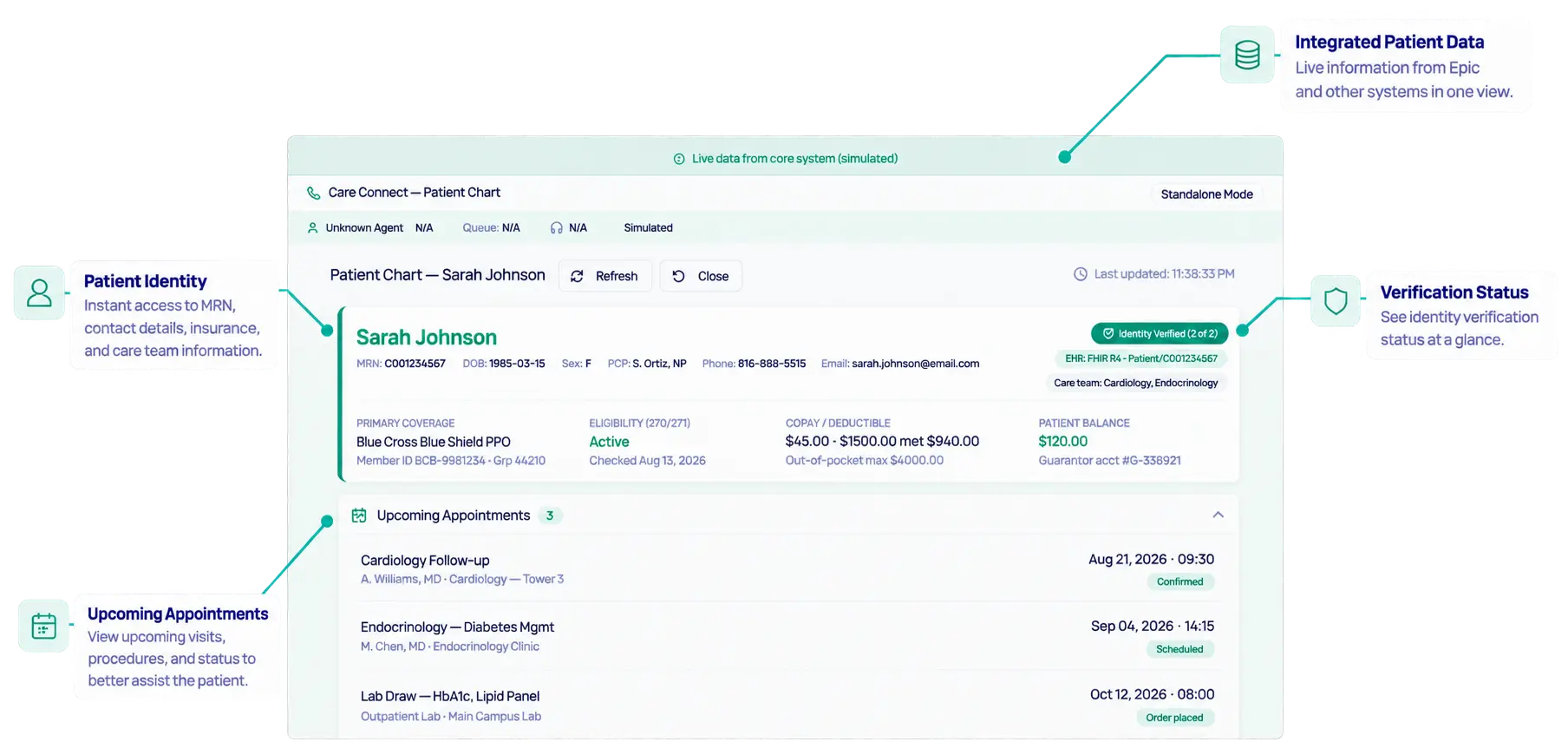
Real-time connections with Epic, Athena, Cerner, and other systems to sync patient data, appointments, and care plans across your CX platform.
Omnichannel Patient Communication
Unified voice, web, mobile, and portal messaging to deliver consistent updates, reminders, and care coordination without duplication or delays.
AI-Driven Workflow Automation
Automated scheduling, insurance verification, follow-ups, and education to reduce manual workload and improve access for patients.
HIPAA-Compliant CX Architecture
Secure system design with encrypted data flows, consent tracking, and audit-ready logging built for healthcare compliance from day one.
Featured Case Study
Our Partners
Condado partners with top AI and CX providers worldwide to deliver enterprise-grade solutions that are seamlessly integrated, vendor-agnostic, and designed to support scalable, context-rich customer engagement.
Ready to Close the Gaps in Your Patient Experience?
Condado helps healthcare organizations build coordinated, intelligent CX platforms that align with clinical workflows, support care teams, and improve patient satisfaction.
Our Healthcare CX360 Assessment includes:

Patient journey mapping and friction analysis

EHR/EMR integration readiness review

Compliance and security alignment

Strategic roadmap for CX modernization

FAQs
Yes. We have deep integration experience with Epic, Cerner, Athena, and custom EHR platforms. Our integrations are bi-directional and real-time, supporting both clinical and operational workflows without introducing data lag or compliance risk.
All of our healthcare deployments follow HIPAA, HITECH, and SOC 2 Type II standards. We implement secure data flows, role-based access controls, audit logging, and consent management.
Yes. We do not force portal migration. Instead, we integrate with your existing patient portal and extend its functionality across voice, mobile, chat, and SMS
We build systems with full ADA and Section 508 accessibility compliance. We also support multilingual communication — including translation workflows, culturally sensitive messaging, and AI that adapts based on patient language preference.