June 22, 2026
What Fintech Gets Right About CX
Discover practical ways traditional banks can deliver fintech-level customer experiences while maintaining compliance and stability.
Read full Article


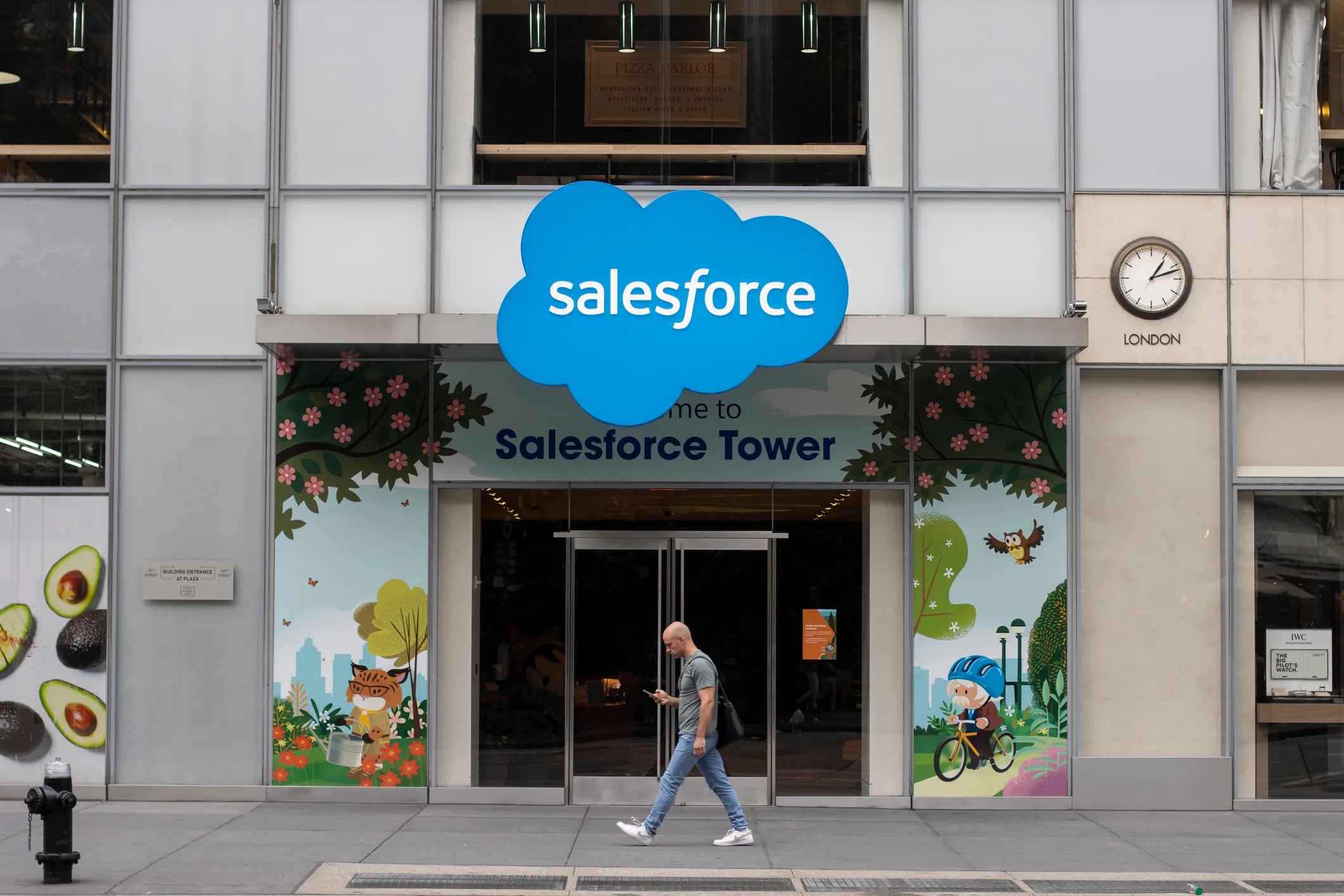
At Enterprise Connect 2026, Salesforce launched Agentforce Contact Center, positioning itself as a native CCaaS platform rather than a CRM that integrates with third-party contact center systems. The platform combines CRM data, AI agents, voice and digital channels, and automation workflows inside unified Salesforce infrastructure.
The announcement targets the traditional contact center technology stack where organizations run separate platforms for customer data management (Salesforce CRM), contact center operations (NICE CXone, Genesys Cloud, Five9), and workflow automation (middleware, integration platforms). Agentforce Contact Center collapses that three-platform architecture into single unified infrastructure.
The implications are substantial. Integration complexity that organizations currently manage between separate platforms theoretically disappears. Whether consolidation actually simplifies operations depends on factors vendor pitches don't emphasize, particularly that Agentforce Contact Center is new platform infrastructure entering a mature market with established competitors.
Understanding why platform consolidation matters requires understanding what integration between separate CRM and CCaaS platforms actually costs. When Salesforce runs as your CRM and NICE CXone powers your contact center, connecting them isn't one-time configuration. It's ongoing operational work.
Data synchronization between systems requires middleware or custom integration code. Customer records updated in Salesforce need to flow to CXone. Interaction records from CXone need to flow back to Salesforce. According to MuleSoft's research on integration complexity, enterprises maintain an average of 900+ applications, with integration representing one of the largest ongoing IT operational costs.
Screen pops that display customer context when interactions arrive require real-time data retrieval across platforms. Activity logging to maintain complete interaction history requires capturing contact center events and recording them in CRM. Workflow automation that spans both systems requires orchestration tools.
Organizations running traditional stacks typically employ integration specialists whose primary job is maintaining connectivity between CRM and contact center systems. When Salesforce releases updates, integrations need testing. When CCaaS platforms change APIs, integration code needs updating. The operational cost is permanent overhead.
Agentforce Contact Center consolidates CRM and CCaaS into single platform architecture. Customer data, interaction channels, AI agents, and automation workflows all operate within Salesforce infrastructure.
Data synchronization disappears because there's no separate system to synchronize with. Customer records exist in one place. Updates happen in real time. Screen pops become native queries rather than cross-platform API calls. Activity logging becomes native platform behavior. Workflow automation through Salesforce Flow extends across CRM and contact center operations without external orchestration.
AI agents operate with complete customer context because CRM history and interaction data exist in the same environment. The latency and data consistency challenges of cross-platform AI deployment theoretically disappear.
The integration tax goes away. The question is what replaces it.
Agentforce Contact Center is new infrastructure competing against CCaaS platforms with years of production hardening. NICE CXone has been in market since 2016. Genesys Cloud launched in 2015. Five9 has operated since 2001. Amazon Connect entered in 2017. These platforms have accumulated years of customer feedback driving feature development, integration patterns proven across diverse enterprise environments, and operational knowledge about running contact centers at scale.
Agentforce Contact Center enters with Salesforce's substantial platform expertise but limited operational track record specifically as CCaaS infrastructure. According to Gartner's analysis of technology adoption cycles, new platforms typically require 18-36 months in production across diverse customer environments before operational maturity stabilizes.
Organizations considering early migration are trading known integration complexity for unknown platform maturity risk. Your current CCaaS integration may be operationally expensive, but it's predictable. You know its limitations. You've built workarounds. You have staff who understand how to operate it.
Migrating to new platform infrastructure means discovering new limitations, building new workarounds, and training staff on unfamiliar operational patterns. For business-critical contact center operations where downtime costs thousands of dollars per minute, this represents substantial risk.
Even if Agentforce Contact Center performs flawlessly, migration from established CCaaS platforms carries costs organizations consistently underestimate. Contact center migrations aren't system upgrades. They're operational transformations affecting every agent, workflow, integration, and reporting process.
Technical migration includes rebuilding routing logic, recreating IVR flows, migrating historical interaction data, reconfiguring integrations with systems beyond Salesforce, and testing under production load. Operational migration includes retraining all agents, updating procedures and documentation, reconfiguring dashboards and reports, and establishing new operational monitoring processes.
Timeline for contact center migrations typically runs 6-12 months for mid-sized operations. Larger or more complex contact centers can take 18+ months. During this period, you're maintaining your existing CCaaS platform while building out Agentforce Contact Center, effectively paying for both.
Research on enterprise technology migrations shows actual costs typically run 2-3x initial estimates because organizations budget for technical work while underestimating organizational change requirements. Organizations that migrate successfully budget 30-40% of project cost for change management, not just technical implementation.
Platform consolidation solves integration architecture challenges. It doesn't eliminate operational work required to run contact centers effectively.
Channel configuration and management still require design and maintenance. Voice routing logic, digital channel flows, omnichannel orchestration, and escalation paths all need definition. AI agent training and governance remain necessary. According to MIT research on AI system maintenance, AI models can degrade 10-15% in performance within months without active maintenance.
Workflow design, agent training, change management, and platform governance all shift rather than disappear. The integration tax goes away. The operational discipline required for effective customer service remains.
For organizations running stable CCaaS platforms with manageable integration complexity, the pragmatic approach may be waiting for Agentforce Contact Center to mature before migrating. Let early adopters discover operational issues. Let Salesforce refine the platform based on production feedback. Let the implementation partner ecosystem develop expertise. Let pricing stabilize as market competition evolves.
This doesn't mean ignoring the development. Organizations should monitor how Agentforce Contact Center evolves, track customer references as they emerge, assess whether Salesforce's roadmap addresses current CCaaS limitations, and maintain relationships with partners who can support eventual migration if it makes strategic sense.
The integration pain you're experiencing is real. The question is whether it's painful enough to justify being an early adopter of new platform infrastructure for business-critical operations, or whether waiting 12-24 months for platform maturity reduces risk while integration complexity remains manageable.
Organizations evaluating migration to Agentforce Contact Center need to weigh several factors beyond theoretical consolidation benefits.
Integration pain tolerance: If you're running extensive custom integration with frequent issues and dedicated integration specialists, consolidation offers clear benefit. If integration is stable, urgency is lower.
Platform maturity risk: Established CCaaS platforms have years of production hardening. Agentforce Contact Center is new infrastructure with limited operational track record. Risk tolerance for business-critical operations should inform timing decisions.
Migration investment: Budget 2-3x initial estimates and plan for 6-12+ month timelines. Factor in parallel operations costs and customer experience risk during transition.
Organizational alignment: Deep Salesforce expertise and integrated CRM-contact center teams favor consolidation. Separate structures and limited Salesforce maturity complicate adoption.
Salesforce Agentforce Contact Center represents meaningful evolution in customer service technology architecture. Consolidating CRM, contact center operations, and automation into unified platforms addresses real integration pain points.
The strategic question isn't whether unified platforms are inherently better. It's whether the integration complexity you're managing justifies early adoption of new platform infrastructure, whether migration cost and risk make sense for your operations, and whether waiting for platform maturity might serve you better.
Organizations heavily invested in Salesforce with significant integration pain and high risk tolerance may find early adoption compelling. Organizations running stable CCaaS operations with manageable integration may benefit from waiting for Agentforce Contact Center to mature.
Condado works with enterprises evaluating contact center platform architecture decisions. We assess current integration costs, evaluate whether new platforms meet operational requirements, plan migration strategies that minimize disruption, and build governance infrastructure that any platform requires. Platform consolidation changes integration economics without eliminating operational discipline required for excellent customer service.
Contact us to discuss how platform architecture decisions affect your customer service operations.

Discover practical ways traditional banks can deliver fintech-level customer experiences while maintaining compliance and stability.

Discover how enterprises can reduce CX costs and create revenue through co-build partnerships and shared equity models.


Condado has become part of One Primero — a consolidated operating brand bringing Condado's contact center expertise and Tricension's technology delivery capability together under one name. Same team, same relationships. New name.